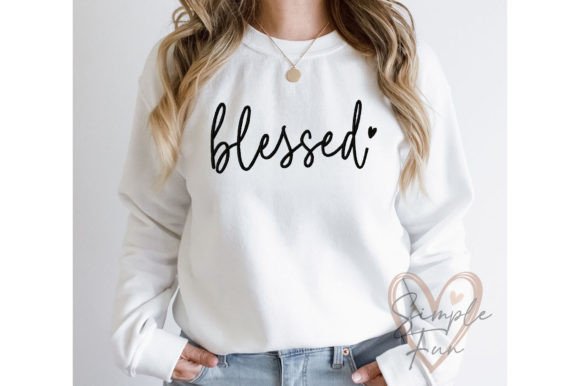
Blessed Machine Embroidery Design
First Impressions: Grace, Not Gaudy
When I opened the Blessed Machine Embroidery Design file, what struck me wasn’t flash—it was quiet confidence. The word “Blessed” sits centered, not shouting, but settling in with intention. The font is elegant without being fussy: soft curves, balanced letter spacing, and just enough delicate detail—think subtle flourishes at the terminals and a gentle lift to the crossbar of the “e”—to suggest thoughtfulness, not ornament overload. It reads as warm, grounded, and quietly reverent—not overtly religious, but unmistakably grateful. That’s rare. So many Thanksgiving-themed embroidery files lean into pumpkins or cornucopias; this one trusts the word itself. For a custom embroidered tote bag destined for a local farmers’ market vendor—or a linen tea towel gifted to a new parent—it lands with sincerity, not cliché.
Where It Shines (and Where It Asks for Care)
This design thrives on stable, medium-weight fabrics where clarity matters: cotton twill aprons, midweight sweatshirts, structured pillow covers, and woven kitchen towels. I tested it on a natural-linen blend tea towel with a light black thread—and the result felt handmade in the best way: precise, legible, and rich with texture. The stitch density feels intentional—not sparse, not overwhelming—so it holds up well on items meant for regular use. As a small shop owner stitching personalized gifts, I’d confidently offer Blessed Machine Embroidery Design on baby onesies (with proper stabilizer), boutique-style caps (center-front placement only), or even as an embroidered patch sewn onto denim jackets.
But here’s where attention matters: avoid it on highly textured fabrics like bouclé or thick terry cloth unless you’re willing to double-stabilize and slow your machine speed. On stretchy knits—say, a lightweight holiday sweater—the delicate terminals can blur if tension isn’t dialed in just right. And while the lettering is clean, the “B” and “d” have subtle curves that may soften on very thin fabric like voile or rayon challis. If you’re using it on dark fabric, test contrast early: light ecru or oatmeal thread reads beautifully, but pale yellow can disappear. Never skip a scrap test—especially before stitching a client’s heirloom baby blanket or an Etsy-sold embroidered pillow cover.
Real-World Fit: More Than Just Holiday Embroidery
I used Blessed Machine Embroidery Design on a set of organic-cotton napkins for a friend’s autumn dinner party—and guests kept asking where I’d sourced the “so calm, so meaningful” monogram. That’s the quiet power here: it elevates everyday objects without demanding attention. It doesn’t scream “Thanksgiving!”—it whispers “gratitude,” making it flexible beyond the holiday season. A craft business owner could list it year-round as part of a “Mindful Stitch” collection, pairing it with neutral thread palettes and minimalist mockups. An Etsy seller might bundle it with coordinating tea towel and apron templates, positioning it as a cohesive, brandable design asset—not just a seasonal download.
For apparel decorators, it works cleanly on chest-placement sweatshirt embroidery, especially when paired with a simple topstitched border or left standalone. On curved surfaces like structured caps? Stick to the front panel and confirm your hoop size accommodates the full width comfortably—no cramming. And if you’re building printable mockups for your digital embroidery file listings, render it in both warm and cool neutrals: oatmeal on charcoal, heather grey on ivory. You’ll see how its elegance shifts subtly—but never falters.
Design Integrity Meets Commercial Practicality
What makes Blessed Machine Embroidery Design commercially smart isn’t just its aesthetic—it’s its restraint. There are no dense fill stitches hiding poor digitizing, no overworked satin borders begging to snag. The running stitch outlines are crisp, the satin stitch letters hold their shape, and the overall footprint stays manageable across common hoop sizes. That means fewer re-hooping pauses during production, cleaner stitch-outs on mid-tier home machines, and reliable results whether you’re embroidering 3 tote bags for a pop-up or 50 custom sweatshirts for a school fundraiser.
It also builds trust. When customers receive a finished product featuring Blessed Machine Embroidery Design, they don’t wonder if it’s mass-produced—they feel the care in the spacing, the balance, the weight of the word. That perception directly lifts perceived value, especially for handmade products sold at craft fairs or boutique consignment shops. And for creative entrepreneurs licensing digital embroidery files, this design reads as professional, versatile, and respectful of the buyer’s time and machine limits—no hidden red flags in the stitch path.
Designer Notes You Can’t Skip
- Always test first—on scrap fabric matching your final project’s weight and weave.
- Review stitch density visually before stitching: look for any overly tight corners or floating threads in the preview window of your embroidery software.
- Confirm hoop size compatibility—don’t assume it fits a 4x4 if your machine runs mostly 5x7.
- Inspect small details at 200% zoom: check the fine terminals on the “B” and “d” for clean jump stitches.
- Test thread color contrast on both light and dark fabric swatches—not just digitally.
- Use appropriate stabilizer: cutaway for knits, tear-away for stable wovens, and fusible + tear-away for lightweight linens.
- Verify licensing terms before selling finished items or bundling Blessed Machine Embroidery Design into commercial design assets.
- Compare black-and-white mockups—they reveal clarity issues color sometimes masks.
Final Thought: A Word That Stays
In a sea of busy, trend-driven embroidery files, Blessed Machine Embroidery Design stands out by doing less—and meaning more. It’s not a showstopper; it’s a steady presence. Whether stitched on a baby’s first holiday onesie, a chef’s apron, or a linen pillow cover for a cozy reading nook, it carries weight without heaviness. For designers, sellers, and makers who value intention over impulse, this isn’t just another Thanksgiving embroidery file—it’s a thoughtful, reusable piece of visual language. Use it well, test it thoroughly, and let the word speak for itself.