Christmas Ball Cross Stitch Pattern PDF
A Thoughtful Fit for Boutique Apparel & Seasonal Sweatshirt Collections
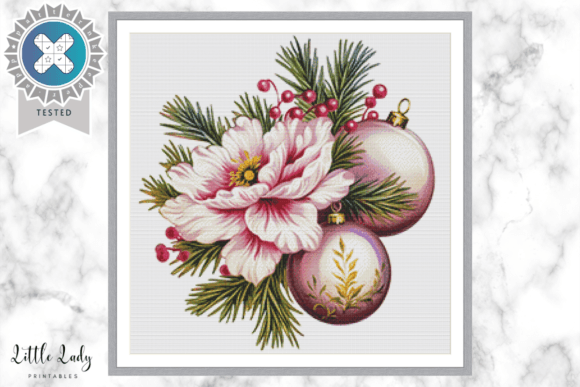
As an embroidery designer who’s developed over 200 custom apparel collections for small clothing brands and Etsy sellers, I opened the Christmas Ball Cross Stitch Pattern PDF with clear intent: could this become a quiet hero in a neutral-toned holiday capsule? Not as a standalone centerpiece—but as a refined, stitchable accent that elevates sweatshirts, hoodies, and denim jackets without shouting. My first impression? It reads as classic with gentle personality: round, balanced, and softly detailed—neither overly ornate nor minimal to the point of disappearing. The black-and-white symbol chart feels clean and professional, and the included mockup gives immediate context for scale and rhythm on fabric.
Visual Personality & Stitching Mood
The Christmas Ball Cross Stitch Pattern PDF leans into timeless charm—not trendy whimsy or rustic folk art. It’s decorative but not fussy, feminine but not saccharine. At its core, it’s a centered, symmetrical ornament with subtle textural variation: layered stitches suggest dimension without demanding high thread count or complex blending. That makes it ideal for sweatshirt embroidery where clarity matters more than photorealism. On a cream hoodie chest placement, it reads as intentional and artisanal; on charcoal fleece, it gains quiet sophistication. It doesn’t compete—it complements.
How It Performs Across Apparel Applications
Sweatshirt & hoodie chest placement: Excellent. Its circular shape and moderate diameter (as shown in the printable mockup) sit comfortably within standard 4”–5” chest zones. No awkward stretching or distortion—especially when paired with light- to medium-weight stabilizer.
Sleeve accents & back designs: Works beautifully at smaller scale. Try resizing the printed chart slightly for a delicate left-sleeve motif on oversized hoodies—or center it cleanly across the upper back of a relaxed-fit t-shirt. The symbol key ensures color transitions stay legible even when reduced.
Tote bags & denim jackets: A standout. The pattern’s inherent structure holds up against texture—whether canvas grain or denim wale—without losing definition. On light-wash denim, contrast stitching (like DMC 310 or 742) pops with warmth and intention.
Boutique merchandise & lifestyle photography: The included mockup is a quiet advantage. It translates seamlessly into cohesive social media graphics and Etsy listings—no need to build custom renders from scratch. That consistency builds buyer trust fast.
Where to Use It Carefully
This isn’t a “drop-in-and-stitch” design for every surface. As a working embroidery designer, I recommend extra attention for:
- Stretchy fabric: Always test on scrap knit before hooping a finished hoodie. Cross stitch patterns rely on grid stability—excess stretch can skew alignment.
- Fleece & heavy ribbed fabric: Use cutaway stabilizer underneath and tear-away on top to support stitch density without puckering.
- Dark garments: Review the floss usage summary closely. Some symbols may call for lighter threads that fade on navy or black—swap in matte cotton or pearl cotton for richer contrast if needed.
- Curved surfaces (like sleeve caps): Avoid placing the full circle here unless you’re hand-stitching. Machine embroidery on curves requires precise digitizing—this is a cross stitch chart, not a machine embroidery design.
- Tiny lettering or fine interior details: There isn’t any—so no risk of illegibility. That’s a strength for apparel: readability at arm’s length, not under magnification.
Impact on Brand Identity & Customer Perception
When used intentionally, the Christmas Ball Cross Stitch Pattern PDF quietly reinforces brand values: craftsmanship, seasonality, and thoughtful detail. It signals that your boutique brand understands the difference between decoration and dilution. Customers scrolling Etsy or Instagram don’t just see a ball—they register care in placement, harmony in thread choice, and cohesion across your product line. That builds recognition faster than bold logos ever could. For handmade product sellers, it also supports visual consistency across packaging, tags, and digital assets—especially since the PDF includes a clean mockup ready for Canva or Photoshop use.
Practical Designer Notes Before You Stitch
Before cutting into your first batch of neutral sweatshirts, take these steps:
- Test on scrap fabric that matches your final garment—same weight, same knit, same dye lot if possible.
- Confirm stabilizer choice: Light cutaway works best for knits; medium-weight tear-away suits stable weaves like denim or canvas.
- Review thread color contrast using the floss usage summary—not just against white paper, but against your actual fabric swatches.
- Inspect stitch density visually in the symbol chart. While not a machine embroidery file, dense areas (like the ball’s inner bands) will require steady tension control during hand stitching.
- Compare placement options using the mockup as a guide—try it centered, slightly lower, or aligned with seam lines to see what feels most balanced on your garment cut.
- Check Creative Fabrica product details carefully before selling finished apparel: licensing terms for commercial embroidery products vary by seller, and this listing specifies only a PDF for 14-count fabric—not machine-ready files or extended-use rights.
Final Thought: A Quiet Anchor for Holiday Collections
The Christmas Ball Cross Stitch Pattern PDF won’t dominate your holiday launch—but it might be the detail that makes customers pause, click, and remember your shop. It’s versatile enough for t-shirts and tote bags, refined enough for premium hoodies, and simple enough to execute consistently across small-batch production. For Creative Fabrica users building a seasonal line, it’s less of a “design” and more of a reliable, mood-aligned tool—one that supports your voice instead of overriding it. In a market flooded with loud, algorithm-friendly graphics, sometimes the most effective statement is a perfectly placed, thoughtfully stitched ball.