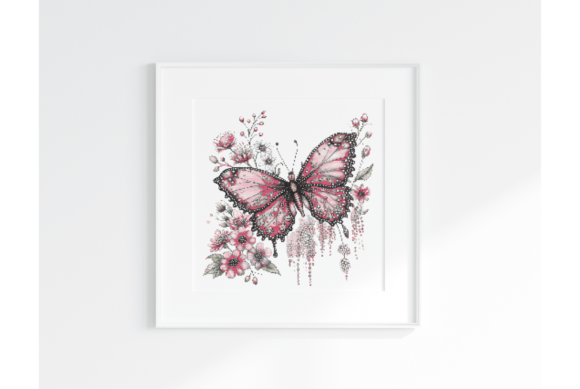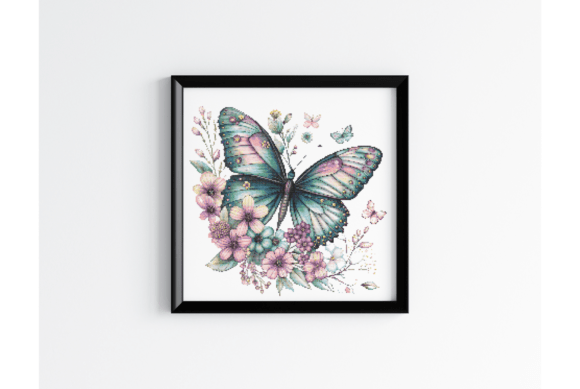
Floral Butterfly Cross Stitch Chart
A Craft Fair Designer’s Real-World Review Before Booth Setup
As an embroidery designer who’s packed, stitched, and sold at over 47 craft fairs—and managed a small-batch handmade shop for eight years—I opened the Floral Butterfly Cross Stitch Chart with one question: Will this stop someone mid-aisle? The answer? Yes—but only if placed right. This nature-themed needlework design lands squarely in the “elegant yet approachable” zone: soft botanical lines meet delicate wing symmetry, with just enough detail to feel intentional, not overwhelming. It’s not farmhouse rustic, nor is it ultra-minimal or cartoon-cute. It reads as quietly premium—ideal for buyers who appreciate handmade quality but don’t want loud novelty.
Where It Shines on Craft Fair & Handmade Market Products
The Floral Butterfly Cross Stitch Chart thrives where subtlety meets storytelling. On a linen tea towel? Perfect—it reads beautifully at 3–4 inches wide, holds visual weight without dominating the fabric, and pairs effortlessly with ceramic mugs or dried lavender bundles at your booth. As an embroidered patch? Strong contender. Its balanced proportions translate cleanly into a 2.5"–3" circle or oval, making it ideal for denim jackets, tote bags, or kids’ backpacks. As an apron embroidery? Excellent focal point above the pocket—especially on oatmeal or sage-dyed cotton. The floral-and-wing motif feels timeless, not trend-dependent, so it won’t date your inventory.
On pillow covers and small fabric pouches? It works—but with caveats. The design’s gentle curves and layered petals require careful hooping and stable backing. Avoid placing it near seams or corners where tension warps stitch alignment. For caps? Not recommended unless scaled *very* carefully—curved surfaces exaggerate density issues, and tiny wing veins may blur on structured twill. Likewise, dark fabric demands high-contrast thread colors; test before committing to a full batch of black market bags.
What Makes It Sell—And What Makes It Stumble
This isn’t just about prettiness. The Floral Butterfly Cross Stitch Chart succeeds because it’s recognizable at a glance—a critical edge in a crowded craft fair aisle. Customers scanning tables for 3–5 seconds still register “butterfly,” “floral,” and “handmade elegance.” That first impression converts browsers into booth stoppers. It also photographs exceptionally well: clean lines, balanced negative space, and natural contrast mean your Etsy listing or Instagram reel needs minimal editing to look polished.
But here’s the reality check: this design leans into medium-to-fine detail. Tiny stamens, wing veining, and petal layering increase stitch density. That means longer stitching time per piece—and higher risk of thread snag or miscount on textured towels or loosely woven linen. If you’re batch-producing embroidered patches or tote bag designs, factor in extra stabilizer (cutaway + tear-away combo works best), slower machine speeds, and pre-test runs on scrap fabric that matches your final product.
Smart Production Notes Every Embroidery Business Owner Should Follow
- Always test on scrap fabric first—especially if using textured tea towels, thick canvas totes, or structured cap fabrics. What looks crisp in a PDF may feather or sink on real cloth.
- Verify thread contrast before stitching 50 units. Light threads on light fabric often disappear under booth lighting—or worse, in phone photos.
- Review spacing between elements. Does the butterfly sit comfortably within standard hoop sizes (4", 5", or 6") without awkward cropping? If not, adjust placement or offer two layout options for customers.
- Confirm commercial licensing before selling finished products. Since this is a digital embroidery file labeled “Graphics” and falls under Cross Stitch Patterns, assume personal use only unless explicitly stated otherwise. Contact the designer or review the listing fine print—don’t guess.
- Create at least one physical mockup before listing online or packing for a fair. A printed mockup doesn’t reveal how thread catches light, how dense areas feel to the touch, or whether the design “breathes” on your chosen fabric.
- Compare across fabric colors. Try the same design on cream, charcoal, and sage. You’ll quickly see which background lifts the floral details and which swallows them.
Why This Design Strengthens Your Brand—Not Just Your Booth
The Floral Butterfly Cross Stitch Chart subtly elevates perceived value. When stitched cleanly on a heavyweight linen pouch or a hand-stitched pillow cover, it signals care, precision, and intention—not just “cute embroidery.” That perception matters deeply to boutique makers and Etsy sellers targeting thoughtful givers, wedding favor buyers, or interior-conscious collectors. It also supports brand consistency: pair it with muted thread palettes (dusty rose, sage green, warm taupe) and natural fiber goods, and you build a cohesive, gallery-ready aesthetic across your product line.
In your booth display, use it as a quiet anchor—not a shout. Mount one finished pillow cover beside raw linen swatches and a framed cross stitch sampler. Place a single embroidered tea towel folded next to a ceramic pitcher. Let the Floral Butterfly Cross Stitch Chart speak through texture, balance, and restraint. That’s how handmade quality wins over impulse.
Final Thought for Creative Entrepreneurs
This isn’t a “plug-and-play” machine embroidery design. It’s a considered graphic—best used by makers who understand fabric behavior, thread interaction, and customer psychology. Used wisely, the Floral Butterfly Cross Stitch Chart becomes more than a pattern: it’s a signature element that draws eyes, invites touch, and quietly tells your story—without a single word.