Realistic Human Heart with Flowers Embroidery Review
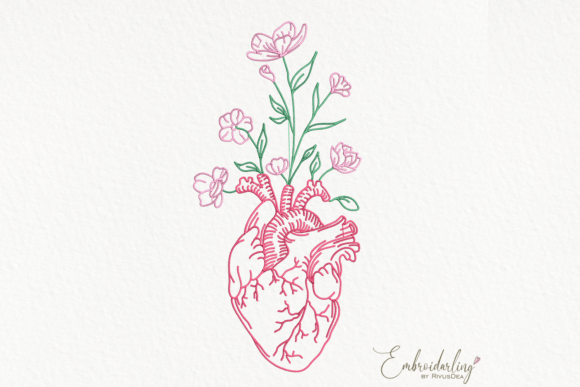
When I first opened the preview for Realistic Human Heart with Flowers, I paused. This is not the kind of design you see at every craft fair booth. It has presence. It walks a line between anatomical honesty and floral softness, and that contrast is exactly what catches a buyer's eye from across a market tent. The design sits in the Outline Flowers category, which tells me the stitch structure leans toward clean linework rather than dense fill, and that makes it versatile for a wide range of handmade products. For anyone selling at weekend markets, on Etsy, or through a small boutique shop, this embroidery file deserves a serious look.
First Impression: Bold, Elegant, and Unexpected
There is something immediately striking about a realistic heart paired with flowers. It feels modern, slightly edgy, and deeply personal. The anatomical shape grounds the design in realism, while the floral elements soften it into something wearable and giftable. This is not a cutesy Valentine's heart. It is not a rustic farmhouse motif. It lands somewhere between contemporary elegance and alternative art, which means it appeals to a broad audience: medical professionals, science lovers, gardeners, tattoo art fans, and anyone who appreciates designs with a little depth. At a craft fair, that kind of cross-category appeal is gold. A customer who walks past a booth of standard monograms and seasonal motifs will stop when they see this stitched on a tote bag or a pillow cover. It stands out without being loud.
What Sells: Matching the Design to the Right Product
Over years of selling finished embroidery at markets, I have learned that the design itself is only half the equation. The product it lands on determines whether someone picks it up, tries it on, or buys it on impulse. Realistic Human Heart with Flowers works best on items where the design has room to breathe. Here is where I would place it first:
- Tote bags and market bags – A large placement of this design on a natural canvas tote transforms a simple bag into a statement piece. The linework style of an outline design stitches beautifully on medium-weight cotton without puckering.
- Apron embroidery – A chest placement on a linen or cotton apron gives this design a sophisticated, almost boutique-kitchen look. Think of the customer who loves cooking and anatomy, or a gardener who wants something unique.
- Pillow covers – A centered placement on a neutral linen pillow cover makes this design feel like curated home décor. It photographs beautifully for online listings.
- Tea towel embroidery – A corner placement on a flour sack towel gives it a subtle, artistic presence. It becomes a conversation piece in a kitchen.
- Embroidered patches – Stitched on a sturdy backing with a merrowed edge, this design becomes a collectible patch that appeals to a completely different audience: jacket customizers, bag decorators, and alternative fashion lovers.
- Fabric pouches and small zip bags – A smaller size of the design works beautifully on a cosmetic pouch or pencil case. It feels personal and intentional.
- Caps – Placed on the front panel of a dad cap, this design takes on a streetwear edge. The curved surface requires careful hooping, but the result is worth it.
Booth Display Strategy: Where This Design Shines
When I set up a craft fair booth, I think about sight lines. A customer scanning tables from six feet away needs to land on something that makes them walk closer. Realistic Human Heart with Flowers works as a visual anchor for a display. I would hang a large tote bag with this design at eye level, paired with a coordinating pillow cover on a shelf. The anatomical shape is recognizable even at a distance, and the floral details reward a closer look. On a table of smaller items, a few pouches and patches featuring this design create a cohesive collection that feels intentional rather than scattered. The design has enough structure to tie a product line together, which is exactly what a small shop owner needs for brand consistency.
Practical Production Notes for Sellers
Before committing to batch production, I always run a test stitch on scrap fabric. Here is what I would check with Realistic Human Heart with Flowers:
- Stitch density – Since this is categorized as an outline design, the stitch count is likely manageable, but I would still inspect areas where the heart's vessels and flower stems intersect. Dense overlaps can cause needle breaks or puckering on lighter fabrics.
- Thread colors – The design preview will guide color choices, but I always test on both light and dark fabric. A design that looks crisp on white may lose contrast on black or charcoal. I would stitch one sample on natural linen and one on a darker background to compare.
- Hoop size – The listing includes six sizes, which is a strong selling point. I would test the smallest size early to confirm that fine details hold up. Tiny flower petals or thin vessel lines can blur at reduced scales, especially on textured fabrics.
- Fabric texture – On smooth cotton, this design should stitch cleanly. On textured towels or thick canvas, the outline may lose precision. I would use a topper stabilizer on anything with a nap or uneven surface.
- Stabilizer choice – For tote bags and aprons, a medium-weight cutaway stabilizer provides lasting support. For tea towels, a tear-away stabilizer with a light touch keeps the back clean. For patches, a heavy stabilizer or a patch-specific backing is essential.
Small Details That Matter at Craft Fairs
Customers at handmade markets are tactile. They touch everything. They run their fingers over the stitching. They flip the item over to look at the back. A clean, well-finished product tells them this is worth the price. With Realistic Human Heart with Flowers, I would pay close attention to the following:
- Thread tails and jump stitches – Trim them meticulously. Outline designs leave visible connection points, and any stray thread will catch a customer's eye in a negative way.
- Backing presentation – For patches, a clean merrowed edge or a heat-sealed backing makes the product feel professional. For towels, a soft backing that does not irritate skin matters.
- Consistency across sizes – If I am selling this design on multiple products, I test each size to ensure the proportions hold. A design that looks balanced on a tote bag may feel cramped or stretched on a cap.
Photographing the Design for Online Listings
Many craft fair sellers also run Etsy shops or social media storefronts. Realistic Human Heart with Flowers photographs exceptionally well. The anatomical lines create visual interest, and the floral elements add softness that photographs beautifully in natural light. For a product listing, I would shoot a flat lay with dried flowers and a neutral background, plus a lifestyle shot of someone holding the tote bag or wearing the cap. The design itself tells a story, and good photography amplifies that story. A printable mockup or a well-styled real product photo can dramatically increase click-through rates on digital embroidery file listings. If you sell the finished product, include a close-up of the stitch detail so buyers can see the quality.
Who Buys This Design: Understanding Your Customer
At a craft fair, I have watched customers pick up anatomical designs and react with surprise and delight. The buyer for this design is often someone who values individuality. They may work in healthcare, science, or education. They may be drawn to botanical art, tattoo culture, or alternative fashion. They may be looking for a gift that feels personal and unexpected. When you display a heart-and-flowers design, you are signaling that your booth offers something beyond the ordinary. This attracts buyers who are willing to pay a premium for handmade quality because they recognize the artistry involved.
Batch Production: Is It Repeatable?
For a small shop owner preparing inventory for a busy market season, repeatability matters. I look for designs that stitch reliably without constant troubleshooting. Realistic Human Heart with Flowers, as an outline design, should run efficiently once the initial settings are dialed in. The six included sizes give flexibility without requiring separate purchases. The file formats—pes, hus, jef, vp3, xxx, DST—cover a wide range of machine brands, which is a practical advantage for multi-machine setups. The included PDF worksheet suggests the designer has provided guidance, which saves time during the setup phase. Still, I would stitch at least three test runs before committing to a batch of twenty tote bags. Thread tension, stabilizer, and fabric stretch can vary, and a small adjustment early on prevents wasted materials later.
Careful-Use Notes for Production Success
Every design has limits. Here is what I would watch for with this embroidery file:
- Dense stitch areas – Even an outline design can have concentrated stitch points where the heart structure meets the flower stems. Test on scrap fabric and adjust tension if needed.
- Tiny details at small sizes – The smallest of the six sizes may lose clarity on the thinnest flower petals or vessel lines. Check the preview carefully and stitch a sample before offering that size on products.
- Thick fabric and textured towels – Outline stitches can sink into plush fabrics. Use a water-soluble topper for towels and fleece to keep the design crisp.
- Curved cap surfaces – Caps require precise hooping and a design that adapts to a curved plane. Test the placement before stitching a full batch.
- Dark fabric contrast – If the thread colors are dark, the design may disappear on black or navy fabric. Light thread on dark fabric, or vice versa, creates the strongest visual impact.
Commercial Considerations for Sellers
Before selling finished products made with Realistic Human Heart with Flowers, confirm the commercial licensing terms. The listing includes the embroidery file and a PDF worksheet, but you need to verify that the license allows you to sell physical items at craft fairs, in online shops, and through boutique retail. Most digital embroidery designers include licensing information in the product description or the worksheet. If the terms are not explicitly stated, reach out to the designer before investing in bulk production. Protecting your small business means doing this due diligence on every design you use commercially.
Final Assessment: Is It Worth the Booth Space?
After evaluating Realistic Human Heart with Flowers from a production, display, and sales perspective, I would confidently include it in my craft fair lineup. The design has a rare combination of artistic integrity and commercial appeal. It works on multiple product types, photographs well, and attracts a customer base that values originality. The outline style keeps stitch times manageable, and the six included sizes offer flexibility for different product applications. The file format compatibility covers the most common machine embroidery systems, and the PDF worksheet adds a layer of professional support. For a seller who wants to stand out at a crowded market, this design is a strong contender. Test it thoroughly, choose your products wisely, and let it do what great designs do: stop people in their tracks and make them reach for their wallets.