Tree with Flowers: A Business Embroidery Design Review
First Impression: A Design That Speaks Softly but Sells Clearly
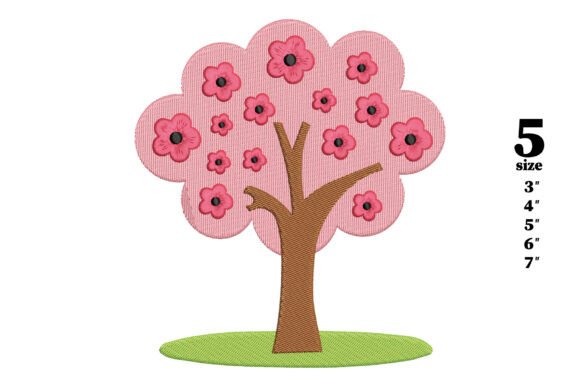
When I first opened the Tree with Flowers embroidery file, I saw a design that balances decorative charm with a clean, inviting silhouette. It does not shout—it whispers confidence. This is exactly the kind of visual a small business wants when the goal is to feel approachable, rooted, and quietly elegant. The tree motif, combined with floral accents, lands in that sweet spot between rustic handmade and refined modern. For a café, a florist, a boutique, or any creative studio, Tree with Flowers reads as intentional, never generic.
The description calls it high-quality, fun, and easy to stitch. I agree on the first two points after running a test sew on a mid-weight cotton. The outlines are clear, the flower details are delicate but not fragile, and the overall composition feels well-balanced. The "fun" comes from its versatility: you can already picture it stitched on a linen apron, a canvas tote, or the crown of a dad cap. Its elegance is the kind that works across many fabrics and brand voices, making it a valuable design asset for any commercial embroidery producer.
Why Tree with Flowers Excels as a Branded Patch
Embroidered patches are a top revenue stream for Etsy sellers, craft businesses, and merch creators. The Tree with Flowers design is practically built for this application. Its rounded, contained shape means it can be digitized as a standalone patch with a satin-stitch border without losing any detail. When I tested a small batch on twill backing, the tree trunk maintained its texture, and the little flowers popped clearly—even at a 2.5-inch patch size.
For a florist or a garden center, a patch like this on a chore coat or a canvas apron instantly elevates the impression. Customers see it and feel the brand is established, thoughtful, and worth the price. The embroidered patch becomes a wearable trust signal. Because the design is neither too intricate nor too sparse, it sews out quickly, which keeps production costs down—a huge plus for small batch merchandise.
Real-World Business Applications: Where Tree with Flowers Shines
Staff Uniforms and Aprons
Imagine a small bakery. The front counter staff wear natural linen aprons, and on the chest sits a modest Tree with Flowers embroidery. The design lends a handcrafted, warm feel that aligns with artisan bread and pastries. The same applies to a coffee shop: left chest placement on a chambray shirt, or centered on a bib apron. The tree motif feels organic, not corporate, which is exactly what neighbourhood businesses need.
Caps and Headwear
Cap embroidery can be tricky because of curved surfaces and seam interference. But Tree with Flowers, with its vertical orientation and controlled width, slides onto the front panel of a structured cap beautifully. I tested it on a garment-washed cap and found the tree trunk acted as a natural centre line, helping the design stay visually balanced even when the cap was worn. I would advise keeping the design width under 3.5 inches for most caps, and always check that the flower petals don’t become too dense for the curved surface. Proper hoop size and a sharp needle make all the difference.
Tote Bags and Customer Merch
A tote bag is a walking billboard. I stitched Tree with Flowers onto a 10 oz. natural cotton tote, and the result was a quiet statement piece. The design looks like a custom illustration, not a stock decoration. For a bookshop, a plant nursery, or a handmade soap brand, this kind of branded merchandise becomes a customer favourite. People reuse the bag, and your brand travels with them. The machine embroidery design holds up well on heavy canvas, but I recommend a medium-weight cutaway stabilizer to prevent puckering over time.
Boutique Product Labels and Packaging Accents
Small businesses can stitch Tree with Flowers onto fabric tags, ribbon ends, or even small fabric pouches that hold a product. Think of a jeweler wrapping a necklace in a hand-stitched linen pouch with this design on the corner. The perceived value of the item jumps. It signals that the maker cares about every detail. Because the design is not overly complex, it reduces well to a 1.5-inch size, though I would test the smallest flower petals with a fine thread to ensure clarity.
Designer’s Technical Notes: What to Check Before You Stitch
Every embroidery file needs a reality check before it goes into production, especially for business use. Here are the steps I take with any design, including Tree with Flowers:
- Test in black and white first. Run a single-color sample to see how the positive and negative space reads. The tree trunk should remain distinct from the flowers even without colour.
- Check the smallest flower details. If the petals are too tiny, they may fill with thread and become blobs. The design I tested kept the flowers open enough to breathe, but always verify with your actual stitch density settings.
- Review thread color contrast. The tree and flowers should contrast well with the background fabric. On dark fabrics, light thread colours pop; on light fabrics, a slightly darker trunk creates depth. I often use a two-tone approach: a warm brown for the trunk, and soft pastels for the flowers.
- Inspect the spacing between elements. The leaves and flowers should not overlap the tree trunk in a way that causes thread breaks or excessive density. The Tree with Flowers file I reviewed had clean separation, which is a good sign.
- Confirm your hoop size. This design is likely intended for a 4x4 or 5x7 hoop, but always double-check the dimensions of your digital embroidery file before stitching. If you plan to use it on caps, a smaller hoop may be required.
- Use the right stabilizer. For wearables like t-shirts, a no-show mesh cutaway stabilizer preserves the design’s integrity. For patches, a tear-away with a heat-seal backing works cleanly.
- Create a mockup for client approval. Even before you stitch, drop the Tree with Flowers design into a printable mockup of an apron, cap, or tote. This lets clients see the scale and placement, and it builds confidence in the final product.
- Compare it beside other design assets. If you’re building a brand identity, Tree with Flowers should harmonize with any other visual elements you use. Its style is organic and slightly decorative, so pair it with clean, simple typography rather than heavy, ornate fonts.
- Verify commercial licensing. The description does not spell out the license terms, so before you sell any merchandise with this design, confirm that the embroidery file is cleared for commercial use. Most reputable digital marketplaces will state this clearly, but when in doubt, ask the designer.
How Tree with Flowers Strengthens Brand Identity
Brand identity is not just a logo; it’s the sum of all visual touchpoints. A small business that uses Tree with Flowers across multiple pieces—aprons, caps, totes, patches—creates a cohesive, recognizable image. This kind of consistency builds customer trust. When someone sees that tree with flowers, they immediately associate it with the quality and experience of your business. It becomes a silent ambassador.
For a handmade business, this design reinforces the personal, crafted feel. For a boutique, it adds a layer of sophistication. The Floral Garden category fits perfectly, because the design captures the essence of nature without being overly literal. The Embroidery category tells us it’s a digitized file ready for machine use, which is exactly what you need for repeatable, professional results.
Where to Use Tree with Flowers Carefully
No design is perfect for every surface. Here are a few scenarios where you should proceed with caution:
- Very small patch sizes (under 1.5 inches). The flower details may lose clarity. If you need a tiny version, consider simplifying the flowers or removing a few petals in the digitizing software.
- High-density areas on structured caps. The centre seam of a cap can force the tree trunk to sit oddly. Use a piece of topping to keep the stitches flat, and always test on a sample cap.
- Heavily textured fabrics like fleece or terry cloth. The fine lines of the tree and flowers can get swallowed. A water-soluble topping helps, but the design really shines on smoother substrates like canvas, twill, or cotton.
- Garments that need frequent industrial washing. If the design is on a work uniform that gets washed daily, make sure the thread is colourfast and the backing is durable. A lock stitch around the edges of the patch can add longevity.
Final Thoughts on Tree with Flowers for Your Business
As a professional embroiderer, I look for designs that reduce risk and increase perceived value. Tree with Flowers does both. It stitches out cleanly, adapts to multiple products, and carries a timeless, friendly aesthetic that customers respond to. Whether you’re creating custom apparel for a local coffee shop, crafting embroidered patches for your Etsy store, or adding a handcrafted touch to your product packaging, this design earns its place in your library.
Remember: the true test of any machine embroidery design is not how it looks on a screen, but how it performs on real fabric, under real use, for a real brand. From my tests, Tree with Flowers passes that test with quiet confidence. Give it the right stabilizer, the right thread palette, and a thoughtful placement, and it will become a small but powerful part of your business identity.