Vintage Kitchen Cross Stitch Pattern
First Impression: Warm, Rustic, and Instantly Recognizable
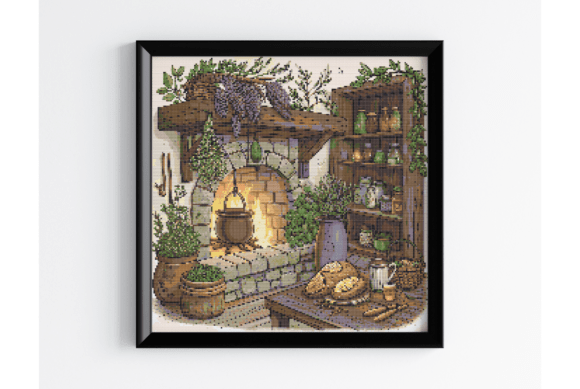
As an embroidery designer who’s curated over 200 craft fair booths in the past decade, my gut reaction to Vintage Kitchen Cross Stitch Pattern is immediate: this is cottagecore with quiet confidence. It doesn’t shout—it invites. The title alone signals warmth, nostalgia, and domestic charm, while the description (“cozy cottagecore scene with an old wood stove and drying herbs”) confirms a strong visual anchor. It’s not modern-minimal or playful-fun; it’s rustic-elegant—soft enough for tea towels, grounded enough for aprons, detailed enough to feel premium on pillow covers. That balance is gold at handmade markets.
Where It Shines: Craft Fair Product Placement
In a booth crowded with bright florals and trendy typography, Vintage Kitchen Cross Stitch Pattern stands out by being *calmly intentional*. It performs exceptionally well on:
- Tea towel embroidery: The stove and herb bundles read clearly at 5”–7” width—ideal for standard linen or cotton towels. Customers love tactile, functional pieces that feel heirloom-ready.
- Apron embroidery: Centered above the pocket or subtly along the bib, it adds narrative without overwhelming. Its vertical composition suits apron silhouettes naturally.
- Embroidered patch: When stitched on twill or denim, the wood stove becomes a conversation starter—especially for cottagecore, slow-living, or vintage kitchen enthusiasts.
- Pillow covers & small pouches: At 4”–6”, the design retains charm and legibility. It feels giftable, boutique-tier—not generic.
It’s less effective on curved surfaces like caps (the stove’s horizontal lines distort) or ultra-dense fabrics like heavy canvas tote bags unless scaled up and simplified. On dark fabric? Only if thread colors are high-contrast—check your PDF’s suggested palette before cutting fabric.
Production Realities: Clarity, Consistency, and Batch-Friendly Flow
This isn’t a “stitch-and-forget” pattern—but it’s not a nightmare either. As a counted chart, it assumes basic cross stitch literacy, which most craft fair shoppers expect from handmade products. That said, its strength lies in readability: clean grid alignment, logical color grouping, and intuitive scene flow (stove → herbs → background texture). No tiny lettering, no micro-details smaller than 3x3 stitches—so it scales down cleanly to 3.5” for patches or up to 9” for market bags without losing identity.
For Etsy sellers and digital embroidery file resellers: Vintage Kitchen Cross Stitch Pattern photographs beautifully. Natural light highlights the texture of wool or cotton floss against linen—making printable mockups pop. Its cohesive mood supports brand consistency across listings: think “The Hearth Collection” or “Cottage Thread Co.”—not just one-off designs.
Careful-Use Notes: Protect Your Booth’s Reputation
Even charming patterns have pitfalls. Here’s what I flag before stitching a single sample:
- Stitch density: Herb clusters near the stove may pack tight. On textured towels or loosely woven linen, test tension and floss thickness—overcrowding muddies the rustic vibe.
- Fabric texture matters: Avoid highly napped or slubbed fabrics unless you’re using a stabilizer that smooths the surface first. A medium-weight cutaway works best for tea towels; tear-away suffices for smooth cotton pouches.
- Hoop size & placement: This design fits comfortably in a 6” hoop—but verify spacing in your PDF. Crowded edges risk distortion on curved items like cap brims or rounded pillow corners.
- Thread colors: The “vintage” feel hinges on warm, muted tones (ochre, sage, charcoal, cream). Bright neon floss breaks the mood—and cheapens perceived value. Stick to DMC or Anchor for consistency.
Why It Converts: Emotional Hook Meets Handmade Credibility
At craft fairs, people don’t buy cross stitch—they buy feeling. Vintage Kitchen Cross Stitch Pattern delivers nostalgia without kitsch, craftsmanship without complication. It signals “I made this with care” when stitched on an apron or tea towel—boosting perceived handmade quality and justifying premium pricing. It also strengthens booth display strength: group three items (a towel, a patch, a pillow) together, and suddenly you’ve built a mini lifestyle vignette. Buyers linger. They imagine it in their own kitchens. That’s engagement you can’t fake.
Designer-to-Designer Must-Dos Before Booth Day
Before listing, printing, or stitching your first batch:
- Test the full Vintage Kitchen Cross Stitch Pattern on scrap fabric matching your intended product—same weave, same weight.
- Check thread contrast under both daylight and indoor booth lighting. What reads softly in studio light may vanish under craft fair fluorescents.
- Review spacing between key elements (e.g., stove to herbs). Tight gaps risk bleeding on dense fabrics.
- Confirm hoop size compatibility—especially if offering custom embroidery services.
- Inspect stitch density in the herb bundle area. If >80% coverage, consider lightening thread count or adding subtle spacing.
- Use the right stabilizer: cutaway for stretchy or textured bases; tear-away for stable cottons.
- Create at least one real mockup—not just a digital preview. Fabric drape changes everything.
- Compare thread colors across multiple fabric swatches (cream, oat, charcoal, sage). Value shifts dramatically.
- Verify commercial licensing terms in the PDF. As a digital seller or boutique maker, you need explicit permission to sell finished products.
Final Thought: A Timeless Anchor for Your Line
Vintage Kitchen Cross Stitch Pattern isn’t flashy—but it’s reliable, evocative, and commercially intelligent. In a sea of trend-driven Cross Stitch Patterns, it offers longevity. It pairs effortlessly with neutral palettes, supports storytelling across product types, and carries the quiet authority of well-designed Graphics. For Etsy sellers, small shop owners, and craft fair veterans alike: this is the kind of pattern that builds repeat customers, earns Instagram tags, and turns casual browsers into loyal buyers—one cozy, hand-stitched kitchen at a time.