Vintage Steam Train Cross Stitch Pattern
A Timeless Touch for Handmade Gifts and Personalized Keepsakes
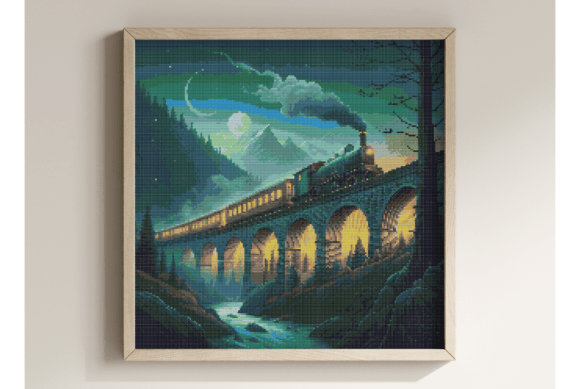
As an embroidery designer who’s stitched everything from delicate baby monograms to bold wedding towel sets, I was immediately drawn to the Vintage Steam Train Cross Stitch Pattern on Creative Fabrica. There’s something quietly powerful about this design—it doesn’t shout, but it lingers. The locomotive glides across a soft mountain landscape with gentle curves, muted earth tones, and just enough detail to feel authentic without overwhelming the stitcher. It’s not overly romantic or whimsical; instead, it carries a warm, classic charm—cozy, nostalgic, and deeply handmade in spirit. That balance makes it exceptionally versatile for real-world projects.
Where This Pattern Shines: From Nursery Walls to Wedding Towels
The Vintage Steam Train Cross Stitch Pattern isn’t just decorative—it tells a story, and stories sell. For baby embroidery, it’s perfect on organic cotton blankets or linen nursery pillows: gentle enough for a boy or girl, gender-neutral yet full of personality. Etsy sellers crafting custom baby gift boxes will love how it elevates simple muslin swaddles into heirloom-worthy pieces. On embroidered towels? It adds quiet sophistication—ideal for a groom’s gift, a father-of-the-bride keepsake, or even a vintage-themed wedding guest towel set.
Think beyond the obvious: this pattern works beautifully on linen aprons for bakers or baristas, canvas tote bags for train enthusiasts, and pillow covers for cozy reading nooks. Small shop owners creating seasonal home decor can pair it with autumnal thread palettes for fall collections—or keep it crisp in navy and cream for year-round appeal. Because it’s a cross stitch pattern (not machine embroidery), it invites slower, intentional making—something customers increasingly value in handmade products.
Practical Considerations for Real-Life Stitching
Before diving in, take a close look at the chart’s detail level. The locomotive’s smokestack, tiny windows, and mountain contours are rendered with thoughtful precision—but some elements sit at the edge of “small lettering” territory. If you’re stitching on textured towels or loosely woven linen, test first: small shapes can blur if fabric shifts or threads snag. Likewise, dense stitch areas (like the train’s boiler or shadowed hills) benefit from proper stabilizer—not just for machine work, but for hand-stitched cross stitch on stretchy or unstable fabrics like lightweight knits or baby onesies.
Dark fabric lovers, take note: contrast matters. Review the recommended thread colors against your base. A charcoal linen might swallow subtle grays unless you opt for brighter ecru or antique white highlights. And while the pattern’s charm lies in its softness, don’t skip a test stitch-out. Try it on fabric similar to your final product—especially for blankets (thick fleece vs. airy cotton voile behave very differently) or embroidered towels (loop pile eats up stitches if tension isn’t balanced).
Building Trust and Emotional Value Through Thoughtful Design
In today’s handmade market, buyers don’t just purchase a product—they invest in meaning. The Vintage Steam Train Cross Stitch Pattern delivers that quietly. It feels personal without being prescriptive. A new parent sees legacy; a couple remembers their first train ride together; a grandparent recalls childhood summers watching steam engines pass. That resonance translates directly into perceived quality—and higher willingness to pay.
For Etsy sellers and small business owners, this pattern supports strong product photography. Its clean lines and balanced composition photograph well flat or styled in natural light—no frantic cropping needed. Pair it with a printable mockup (available through Creative Fabrica’s Graphics category), and you’ve got polished listings in minutes. More importantly, finished pieces feel intentional, not mass-produced. That authenticity builds customer trust, encourages repeat orders, and fuels word-of-mouth referrals.
Smart Stitching Habits for Better Finished Products
Whether you're stitching for your own shop or fulfilling a custom order, these habits make all the difference with the Vintage Steam Train Cross Stitch Pattern:
- Create a test stitch-out—even a 2" square reveals how thread colors interact and whether small details hold up.
- Compare thread colors before committing. DMC or Anchor equivalents may vary slightly by dye lot; swatch them side-by-side on your fabric.
- Test on similar fabric, especially for high-visibility items like pillow covers or aprons—what reads clearly on Aida cloth may fade on heavy twill.
- Confirm hoop size and stitch density before starting large projects. Dense sections need secure hooping to prevent puckering.
- Use appropriate stabilizer—even for hand stitching, tear-away or cut-away helps maintain shape on knit or terrycloth.
- Review product details and licensing on Creative Fabrica before selling finished products. As a digital embroidery file, its commercial use terms matter for small shop owners and digital product sellers.
Final Thoughts: Why This Pattern Belongs in Your Creative Toolkit
The Vintage Steam Train Cross Stitch Pattern is more than a charming motif—it’s a quiet workhorse for meaningful making. It bridges generations, occasions, and aesthetics without forcing itself into a box. Whether you’re designing baby embroidery for a boutique, curating wedding gifts for a local craft fair, or building an Etsy shop around personalized home decor, this pattern earns its place in your collection.
Its strength lies in restraint: no flashy gradients, no trendy fonts—just honest, detailed cross stitch that celebrates craft over clutter. That’s why it photographs beautifully, stitches reliably, and connects emotionally. In a world of fast trends, the Vintage Steam Train Cross Stitch Pattern reminds us that timeless design never goes out of style—and neither does the handmade care we pour into every stitch.